
By CARI WASSON ’27
Updated 11:50 a.m. EDT, 13 Nov 2026
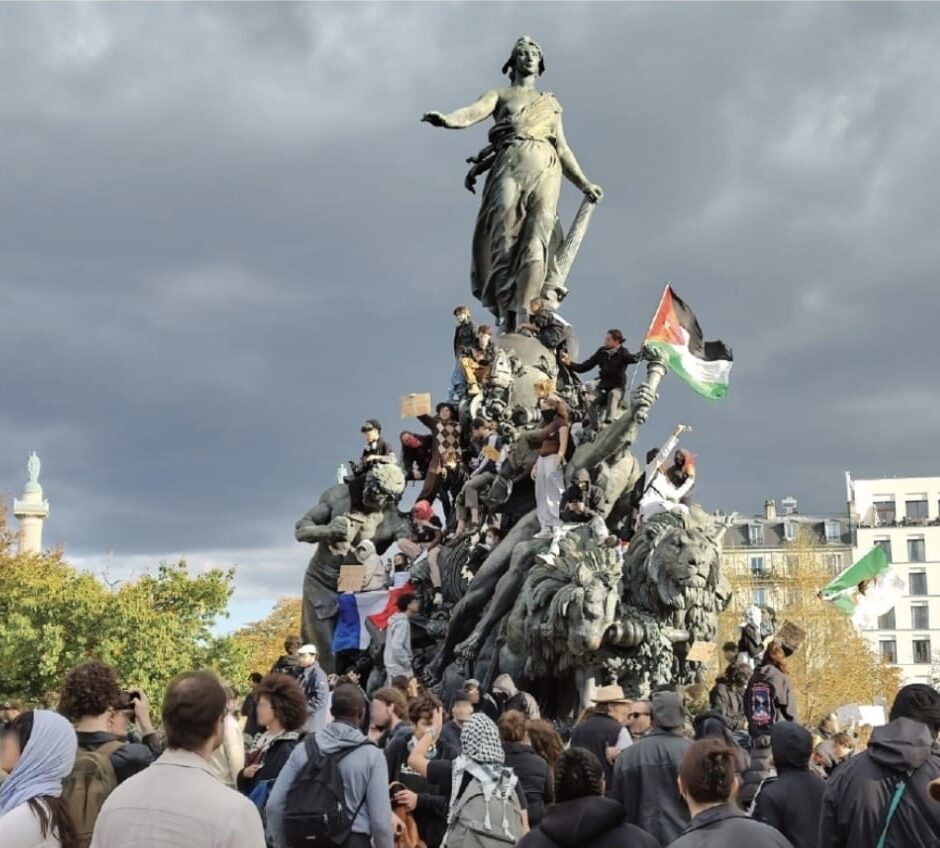
In Sept. 2026, French students and teachers at Antoine de Saint-Exupéry High School in the Parisian suburb of Créteila began protesting over staff shortages and other poor school conditions. This was just the beginning of a weeks-long, nationwide string of protests and riots as other high schools, university students and unions joined.
Initially the reason for all the protests remained the same, focusing on school conditions and education. As time went on, these protests evolved to include the rising costs of living and housing along with other political, economic and social concerns.
With this evolution, the manner of action evolved as well. Cora Paige ‘27, a student from Madrid, Spain, says the event “went from a peaceful protest for the increased housing prices and unjust educational system, to not-so-peaceful riots.”
These riots, conducted by protestors and controlled by police, become more violent each day. The violence appears on both sides, as students and other protestors have lit trash cans and even thrown fireworks at buildings and police while police have used tear gas and have reportedly injured and detained many minors.
One 15-year-old was maimed by a sting ball grenade while a 14-year-old sustained a fractured jaw, both at the hands of the police. And while it is predominantly minors, Christophe M., a 59 year old man, has recently passed away due to cardio-respiratory failure after leaving a tear-gassed building.
Rioters have also taken to expressing themselves through vandalism. Paige notes how the protests and riots have “resulted in precious architectural structures being vandalized, French citizens’ business and restaurants [being] completely destroyed.” Famous art pieces were also damaged, such as the bust of Marianne, now cast to the floor after the Marseille City Hall was ransacked by protestors. The most notable example of this is the destruction of the Limoges Town Hall, which was regarded as an architectural gem throughout the country. While watching the building go up in flames, onlookers likened the incident to the fire of Cathédrale Notre-Dame de Paris.
France isn’t the only European country experiencing protests and riots. These events can be seen throughout all of Europe, but most notably in Italy, Germany and Spain. Citizens of these countries are protesting very similar things to France, but primarily the rising housing cost.
According to the Council for the European Union, the cost of living has skyrocketed 60% since 2015, with some states even seeing a 200% increase. Roughly 1 in 10 Europeans are unable to pay their rent on time. For Spain, the breaking point was on Oct. 23 when an 87-year-old woman, María del Carmen “Maricarmen” Abascal, was kicked out of her house on national television for being unable to pay the rising housing costs. Abascal had lived in that house for 70 years and passed away shortly after the eviction.
“People started flooding the streets,” Paige says, noting how what started as a peaceful protest “turned into a violent act of destroying buildings and damaging ancient, beautiful and precious architecture.”
There is currently no end in sight for the protests in France as another is planned for Nov. 17. ★
