
By: KATHERINE SOMMERS ’26, SYDNEY ARNOLD ’26
Updated 11:50 a.m. EDT, 7 Nov 2025
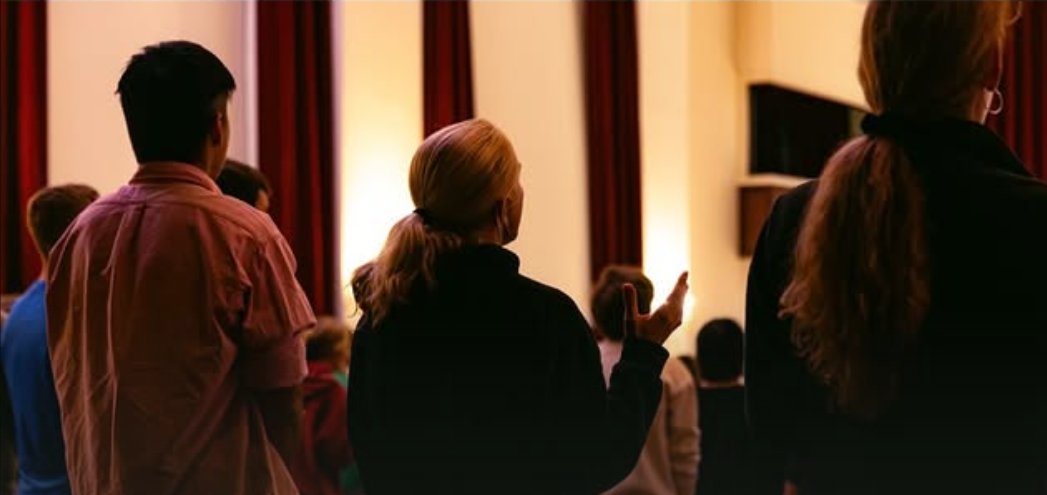
“If there are any in this room or across the globe who would desire to receive Jesus as their Savior … I am going to ask you to put action to your faith, and I’d ask you to stand right now to receive the Lord,” Pastor Rob McCoy called from the pulpit at Charlie Kirk’s funeral. An estimated 100,000 people were packed into State Farm Stadium in Glendale, Arizona and the surrounding areas, overflowing into parking lots and other stadiums nearby. When McCoy presented the altar call, thousands stood while the seated believers in attendance clapped and praised God.
Following the funeral, FOX News published articles with the headings, “Faith revival follows Charlie Kirk’s death as more people attend Mass and read the Bible” and “Faith leaders report 15% increase in church attendance as ‘Charlie Kirk Effect’ draws young people to Christianity.”
FOX News is not the only source proclaiming revival. CBS recently published an article titled, “U.S. sees surge in baptisms as more Gen Z men embrace faith after pandemic: ‘They’re coming in by the thousands’” detailing the mass baptisms that occurred at the end of September in California.
Word of this supposed revival has spread across the internet since, with both proponents and critics speaking out on the subject. Brandon Lake shared, following the funeral, that it was “more than just a memorial.” He said, “It felt like the communion of souls. I had never seen anything like it… [Charlie] was representing Christ according to God’s calling, and paid the ultimate price for it.”
While some Christian influencers, like Lake, praised the change in the wake of Kirk’s funeral, viral Instagram reels expressed, “A room full of people singing means absolutely nothing when 80% of the service is an eloquent concoction of hate and politics. I would argue this wasn’t even worship, it was a well-performed show…[revival] is revealed by the actions of what comes out of your own mouth.”
But what truly measures a revival? Are Bible sales and other consumer metrics the only quantitative way to measure a revival of Christianity in America?
In the Christian context, “revival” is understood as a spiritual reawakening that renews a believer’s love for God and deepens faith after a period of spiritual dormancy or stagnation. It involves a renewed awareness of God’s holiness, a conviction of sin on both personal and communal levels and a heartfelt desire for repentance, humility and moral growth. At its core, revival represents a fresh encounter with spiritual truth that inspires renewed devotion and transformation within individuals and communities alike.
Dean of Spiritual Life at Houghton University, Scott Hallman, explained that “revival” can have many different meanings and connotations for different people. He shared that he does see a change, even within Houghton’s community but he would be “more inclined” to use words such as “hunger, or an awakening.” Hallman expressed that while stats like Bible sales can be informative, he thinks a “larger, wider, and more informed narrative” could be more representative than a singular instance or rally. He shared, “If there is any sign of revival happening, it appears to be a protracted experience of discernment, not an instantaneous moment or event.”
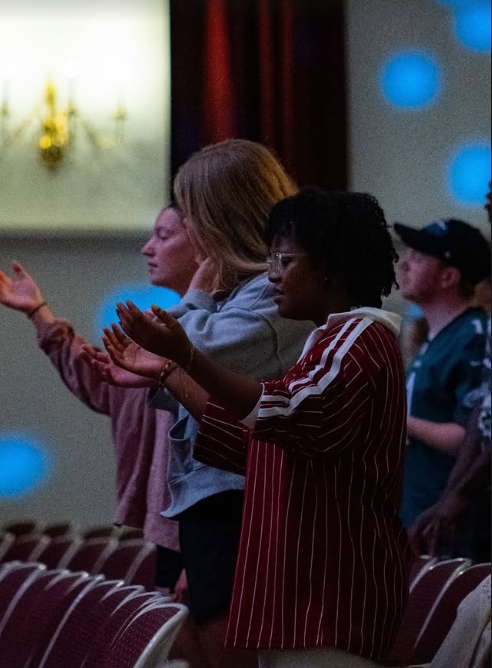
So is the “Charlie Kirk Effect” a sign, or start, of a true revival? Can a revival be authentically based in scripture and the Holy Spirit when it is closely tied to a political movement?
Moments before McCoy’s altar call, he stated that “the most powerful political people in the free world” were coming to speak to the crowd next. President Donald Trump, Secretary of War Pete Hegseth, Deputy Chief of Staff Stephen Miller and other prominent political figures then took the stage.
Trump stated, “[Charlie] did not hate his opponents, he wanted the best for them. That’s where I disagree with Charlie. I hate my opponent.”
Following that, Miller said, “The day that Charlie died, the angels wept, but those tears have been turned into fire in our hearts…and that fire burns with a righteous fury that our enemies cannot comprehend or understand.”
Critics of the “Charlie Kirk Effect” argue that Kirk has not spurred a spiritual awakening but has instead galvanized a political and ideological movement.
News stations, such as NBC and PBS, highlighted the way that Kirk’s political views became conflated with his religious beliefs, with headlines reading, “Charlie Kirk’s funeral serves as a conservative ‘revival,’ mixing calls for forgiveness and vengeance” and “How Charlie Kirk helped shape a conservative force for a new generation.” McCoy stated, “Charlie looked at politics as an onramp to Jesus.” And since his passing, this narrative of unity has been preached to the masses, revealing politics as a bridge to salvation.
Christian best-selling author, Brian Recker, shared in a recent newsletter titled “I still believe in revival, but this ain’t it” that “Jesus said that his kingdom would be like a mustard seed—starting small and growing to change the world.” He closed his newsletter stating, “This is the revival I long for. May the Spirit fall on all flesh, until every debt is forgiven, every prisoner freed, and every person knows they belong.”
When we see the union of political agendas and religious beliefs in the US, we are left with a pressing question: Are we witnessing a true revival of faith across the nation, or an attempt to confine religion within conservative politics?★
